
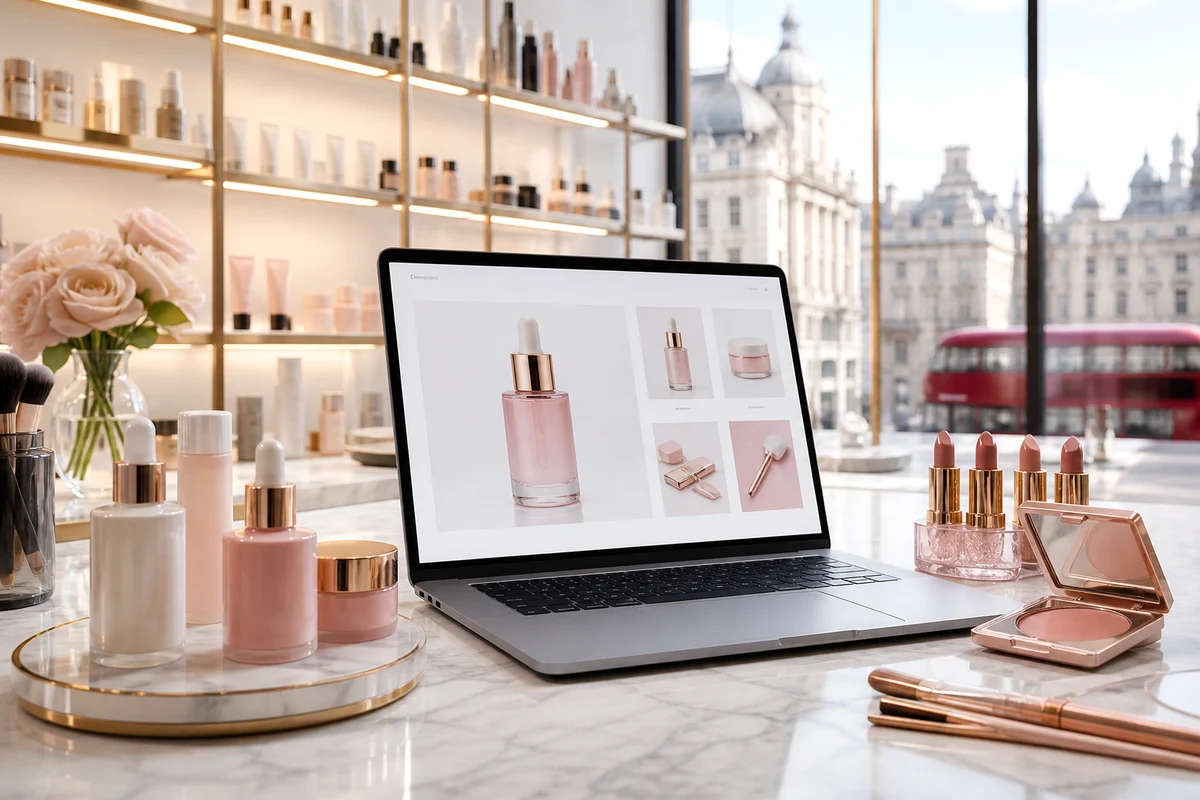
How to Build a Beauty & Cosmetics eCommerce Website in London?
London's beauty scene is loud, fast, and a little bit ruthless. One week a serum is everywhere on TikTok. The next week, a new brand steals the spotlight. Customers are watching closely, scrolling fast, and deciding in seconds whether a brand feels trustworthy.
That's the real challenge. Not just building a website. Building one that earns trust in the first ten seconds.
From boutique skincare shelves in Chelsea to fast-moving skincare startups in Shoreditch, beauty businesses across London are all fighting for the same thing: attention that turns into a sale. Shoppers expect fast delivery. They expect real reviews. They expect a site that feels as polished as the packaging on the product itself.
This guide walks through exactly what it takes to plan, build, launch, and grow a beauty e-commerce website in London. No fluff. Just the steps that actually matter.
A Website Is More Than a Shop
Here's something worth sitting with for a second: a beauty e-commerce website isn't just a place to sell things.
It's a digital shopfront. It's where a first-time visitor decides if a brand feels premium or cheap. It's a teacher, explaining what an ingredient does before someone commits to buying it. And most of all, it's a revenue engine that keeps working at 2 am while the shop is closed and the team is asleep.
Get all four of those right, and growth tends to follow.
Why London Beauty Businesses Need an Ecommerce Website
Shopping habits have shifted, and beauty shopping shifted first.
Customers used to walk into a shop, ask a beauty consultant a question, and buy on the spot. Now that consultation happens online. A shopper searches Google for "best vitamin C serum for oily skin". She watches three TikTok reviews. She checks the ingredient list against something she read on a skincare forum. Then, and only then, does she buy.
That whole journey happens before a brand even knows she exists.
London Shoppers Expect More
Customers in Chelsea, Kensington, Camden, Shoreditch, Soho, Notting Hill, and Canary Wharf are used to premium experiences. They walk past flagship stores every day. Their bar for "good" is already high, and a clunky website drops below that bar fast.
A slow-loading page, blurry product photos, or a checkout that asks fifteen questions before a sale is complete? That's an instant bounce. The shopper is back on Google in seconds, looking at a competitor instead.
UK e-commerce has been growing steadily for years, and beauty is one of the categories leading that growth, driven heavily by mobile shopping. That's why many brands invest in professional eCommerce website development services in London before focusing on paid marketing, because a strong website becomes the foundation for long-term online growth.
Most beauty purchases today start and finish on a phone screen, not a laptop. That single fact should shape almost every decision made about a beauty website.
Understand Your Beauty Ecommerce Business Model
Not every beauty business needs the same kind of website. Picking the wrong model early on tends to cause headaches later, so it helps to get specific before any building starts.
Cosmetic Brand Websites
These websites are built for skincare or makeup brands selling directly to customers without relying on retailers. This approach aligns with modern D2C eCommerce development, giving brands more control over customer relationships, marketing, and repeat sales.
The focus here sits on storytelling, ingredient education, reviews, and often a subscription option for repeat purchases.
Beauty Supply Store e-Commerce
Suppliers carrying dozens or hundreds of products from multiple brands need something different. Big catalogues. Strong filters. Wholesale pricing options for salons and stylists buying in bulk.
Salon e-Commerce Websites
A salon selling both services and products needs booking tools built right alongside the shop. Products, loyalty points, and appointment scheduling all living in one place, not three separate systems that don't talk to each other.
Marketplace-style Stores
Some businesses want to host multiple brands under one roof, almost like a mini department store online. This model needs vendor management tools and a more complex backend, but it can open the door to a much wider product range without holding all the stock.
What Successful London Beauty Brands Get Right
Looking at what already works is one of the fastest ways to shortcut mistakes. A few London and UK-based beauty brands are worth studying closely, not to copy, but to understand what's actually driving their sales.
The INKEY List built its whole brand around explaining ingredients in plain language. No jargon. No confusing science. Just clear answers to "what does this actually do for my skin?"
Charlotte Tilbury leans hard into storytelling and premium branding. Every product page feels like part of a bigger world, not a standalone listing.
Cult Beauty built its business around curated discovery and editorial content, almost like a beauty magazine that happens to sell products.
Space NK blends a luxury shopping feel with strong omnichannel retail, letting shoppers move between online and in-store without friction.
None of these brands are perfect templates to copy. But each one teaches something. Education builds trust. Storytelling builds loyalty. Curated discovery makes shopping feel easier instead of overwhelming.
The real question worth asking is this: what would a shopper actually learn or feel while browsing a specific site, and how could that experience shape a new London beauty brand?
Essential Features of a Beauty and Cosmetics E-commerce Website
This is where strategy turns into something real. A features list, organised by what it actually does for the business.
Product Discovery Features
A shopper who can't find what she needs will leave. Advanced search, filters, and smart categories keep her browsing instead of bouncing. Useful filters for beauty include skin type, hair type, ingredient, skin concern, and brand.
Product Page Features
A strong beauty product page usually includes:
- High-quality images from multiple angles
- Short videos showing texture or application
- A clear ingredient list
- Real benefits explained in plain language
- Usage instructions
- Genuine customer reviews
- A short FAQ section
- Before and after photos, where relevant
Skip more than two of these, and conversion rates tend to drop. Beauty shoppers research harder than almost any other category before buying.
Trust-building Features
Reviews. Certifications, like cruelty-free or vegan labels. Secure payment badges. A clear returns policy. Real testimonials, not vague five-star ratings with no text attached.
Conversion Features
Wishlists. Product bundles. Subscription options for things people repurchase, like moisturiser or shampoo. Abandoned cart recovery emails, which quietly recover a surprising amount of lost sales.
Personalisation Features
Modern beauty shoppers expect a bit of magic. Skin quizzes that recommend products. AI-driven suggestions based on browsing history. Some brands even offer virtual try-on tools for makeup shades.
Choosing the Right Ecommerce Platform for Your Beauty & Cosmetics Business in London
The platform choice shapes almost everything that follows, so it deserves real thought rather than a quick guess.
| Platform | Best For | Notes |
|---|---|---|
| Shopify | Startups and DTC beauty brands | Fast to launch, strong app ecosystem, easy for non-technical teams |
| WooCommerce | Content-heavy businesses | Works inside WordPress, flexible, needs more technical upkeep |
| Magento / Adobe Commerce | Large retailers | Powerful and customizable, but needs a bigger budget and dev team |
| Custom development | Unique business needs | Full control, but the slowest and most expensive route |
Shopify tends to be the go-to choice for most new beauty brands in London because it gets a store live quickly without needing a large development team.
As product catalogues, integrations, and customer journeys become more complex, many businesses move towards a custom eCommerce development company that can build around their exact requirements instead of platform limitations.
Beauty & Cosmetics Ecommerce Website Development Process
A professional build usually follows six steps, in this order.
Step 1: Start With Business Discovery, Not Website Design
The strongest beauty e-commerce websites usually begin with understanding the business itself.
Before writing a single line of code, businesses that hire experienced eCommerce developers usually begin with product research, customer analysis, competitor reviews, and long-term business planning. That groundwork shapes every technical decision that follows.
This early work shapes every decision that follows.
A skincare startup in Shoreditch will have very different priorities from a luxury beauty salon in Chelsea. One may focus on online product sales, while the other needs appointment booking, membership plans, and local SEO. Building both websites in the same way almost always creates problems later.
During the discovery stage, teams usually answer questions like:
- Who is the ideal customer?
- What products or services will generate the most revenue?
- Will the business sell only in London or across the UK?
- Does the website need subscriptions, bundles, or loyalty rewards?
- How will orders, inventory, and customer data be managed?
Step 2: Plan the Customer Journey Before Building Anything
One lesson becomes clear after reviewing successful beauty e-commerce stores: customers should never have to think too much.
Every extra click, confusing menu, or unnecessary page gives shoppers another reason to leave.
That's why experienced e-commerce teams spend time mapping the customer journey before moving into design.
Think about someone searching for a vitamin C serum.
A poor website forces them to browse dozens of products before finding the right one.
A well-planned website makes the journey feel almost effortless.
It usually looks like this:
- Customer lands on a category page from Google.
- Filters products by skin type and concern.
- Opens a product page with clear images, ingredient details, reviews, and usage tips.
- Adds the product to the cart.
- Completes checkout in just a few steps.
Each stage removes uncertainty instead of adding it.
Many beauty brands focus heavily on attracting visitors through advertising but spend very little time improving the buying journey. In practice, improving navigation and simplifying checkout often delivers a bigger increase in conversions than spending more on paid campaigns.
That's why customer journey planning should always happen before design begins.
Step 3: Design an Experience That Reflects Your Brand
Beauty products are emotional purchases.
People don't just buy a moisturiser. They buy healthier-looking skin. They don't only purchase lipstick. They're buying confidence before an important event.
Your website should create that same feeling.
Visual design isn't about making the website look expensive. It's about making every page feel trustworthy, clean, and easy to explore.
A strong beauty ecommerce design normally includes:
- High-quality product photography with multiple angles
- Consistent colours and typography
- Plenty of white space to keep pages easy to scan
- Mobile-friendly layouts
- Clear call-to-action buttons
- Lifestyle images that show products being used naturally
One common mistake appears again and again.
Some businesses try to fit too much onto the homepage.
- Large banners.
- Pop-ups.
- Discount messages.
- Social feeds.
- Newsletter forms.
Customers become distracted before they even start browsing.
The best-performing beauty websites usually feel much simpler. Every section has a purpose, and every page guides shoppers towards the next action naturally.
Step 4: Build the Website Around Real Business Operations
This is where development begins, but good development is about much more than writing code.
The website needs to support how the business operates every day.
For example, a growing cosmetics retailer may need:
- Product inventory management
- Order tracking
- Customer accounts
- Multiple payment gateways
- Shipping integrations
- Stock notifications
- Loyalty programmes
- Discount management
- Email marketing connections
A salon may also need:
- Appointment scheduling
- Staff availability
- Service packages
- Gift vouchers
- Membership plans
Many businesses underestimate this stage.
Adding a feature later is rarely as simple as installing another plugin. In larger projects, new functionality often affects checkout, inventory, reporting, and customer accounts.
That's why experienced development teams think several months ahead rather than focusing only on launch day.
The goal isn't simply to build a website.
The goal is to build a platform that continues supporting the business as sales increase.
Step 5: Test Every Customer Action Before Launch
One checkout error can quietly cost hundreds of sales.
A payment button that doesn't respond.
A shipping fee that displays incorrectly.
Images that load slowly on mobile.
These small issues damage customer confidence almost instantly.
Before launching, experienced teams usually test every important customer action, including:
- Browsing products
- Applying filters
- Searching products
- Creating an account
- Adding items to the basket
- Applying discount codes
- Completing payments
- Receiving confirmation emails
- Viewing the website on different mobile devices
Testing isn't only about finding bugs.
It's also about removing friction.
For example, if customers regularly abandon the checkout after reaching the delivery page, that usually points to a usability problem rather than a marketing issue.
Small improvements made before launch often produce better long-term results than major redesigns later.
Step 6: Launch, Measure, and Keep Improving
Many business owners think launch day marks the end of the project.
In reality, it's where the real work begins.
Once visitors start using the website, they reveal valuable information.
Analytics shows:
- Which products receive the most attention
- Where visitors leave the website
- Which pages convert best
- Which marketing channels generate sales
- How mobile users behave compared to desktop users
Successful beauty brands review this data regularly.
Sometimes a simple product description rewrite increases conversions.
Sometimes moving customer reviews higher on the page improves trust.
Teams also use AI in eCommerce development to personalise product recommendations, analyse customer behaviour, and improve conversions without changing the entire website.
Sometimes reducing checkout fields leads to more completed purchases.
The strongest e-commerce businesses rarely make dramatic changes overnight.
They improve the website steadily, learn from customer behaviour, and keep refining the shopping experience over time.
That continuous improvement is often what separates fast-growing beauty brands from competitors whose websites remain unchanged for years.
Cost to Build Beauty And Cosmetics Ecommerce Website in London
Budget is usually the first real question on anyone's mind, so here's a realistic breakdown.
| Website Type | Estimated Cost | Typical Timeline | Best For |
|---|---|---|---|
| Starter Beauty Store | £4,000 – £8,000 | 3–5 weeks | New beauty brands, salons, and startups |
| Growing Beauty eCommerce Store | £8,000 – £15,000 | 5–8 weeks | Businesses expanding their online sales |
| Professional Beauty Brand Website | £15,000 – £30,000 | 8–12 weeks | Established skincare, cosmetics, and beauty retailers |
| Enterprise Beauty eCommerce Platform | £30,000 – £50,000+ | 3–6 months | Multi-location retailers, wholesalers, and large beauty brands |
A few things push cost up fast: the number of products, custom design requirements, third-party integrations, and bespoke functionality that doesn't come standard.
Project timelines also affect planning, so many businesses review how long eCommerce website development takes before setting budgets and launch dates.
Skin quizzes, virtual try-on tools, and loyalty programmes all add real development time.
Local SEO Strategy for London Beauty & Cosmetics E-commerce Websites
This is where most competitors fall short, and it's also the easiest place to pull ahead of them.
Google Business Profile
A claimed, fully filled-out Google Business Profile helps local shoppers find a brand faster, especially anyone with a physical shop or salon location.
Local Landing Pages
Pages built around specific searches tend to perform well, things like "beauty e-commerce website London", "cosmetics supplier Chelsea", "skincare store Kensington", "beauty products Shoreditch", "cosmetic shop Camden", or "haircare supplier Croydon".
Local Content Ideas
Blog posts that mix beauty topics with a London angle tend to attract local traffic naturally. Ideas worth trying: "Best Skincare Brands in London," "London Beauty Trends for 2026," or "Where to Buy Professional Hair Products in London."
How to Increase Sales After Launching Your Beauty and Cosmetics E-commerce Website
Launching is the starting line, not the finish line. Growth needs ongoing work across a few channels.
SEO
Product pages, blog posts, and buying guides all help a site climb search rankings over time. This isn't a one-time task. It's ongoing.
Content Marketing
Skincare routines, ingredient guides, and beauty tutorials all build trust while quietly supporting SEO. Shoppers who trust a brand's advice tend to trust its products too.
Social Commerce
Instagram, TikTok, and Pinterest all drive real beauty sales today. Shoppable posts shorten the path from "I saw this" to "I bought this."
Email Marketing
A few automated flows do most of the heavy lifting: welcome emails for new subscribers, abandoned cart reminders, replenishment emails timed around when a product typically runs out, and loyalty program updates.
Common Mistakes London Beauty Businesses Make
A few mistakes show up again and again across beauty e-commerce projects.
- Building a beautiful site with no conversion strategy. A gorgeous design means nothing if shoppers can't figure out how to buy.
- Ignoring mobile shopping. Most beauty traffic comes from phones. A site that's clunky on mobile is losing sales every single day.
- Skipping educational content. Shoppers want to understand a product before buying it, not just see a price tag.
- Competing only on price. Beauty shoppers pay for trust and quality far more than they hunt for the cheapest option.
- Weak product photography. In a category this visual, poor images can quietly kill conversion rates no matter how good the product actually is.
Conclusion
A beauty e-commerce website in London isn't just a technical project. It's a business decision that touches branding, customer trust, and long-term growth all at once.
Getting the foundation right, from platform choice to local SEO, sets up everything that comes after it.
The brands winning in London right now aren't necessarily the ones with the biggest budgets.
They're the ones that understood their customer, built for mobile first, and kept earning trust one visit at a time.
Frequently Asked Questions
1. How much does it cost to build a beauty eCommerce website in London?
A basic beauty eCommerce website usually costs £4,000–£8,000. Advanced stores with custom features typically range from £15,000–£50,000+.
2. Which platform is best for a beauty and cosmetics website?
Shopify suits most startups. WooCommerce works well for content-focused brands, while Adobe Commerce or custom builds fit larger beauty businesses.
3. How long does it take to launch a beauty eCommerce website?
Most projects take 3–12 weeks. Enterprise websites with custom integrations and advanced features can take 3–6 months.
4. What features should a beauty eCommerce website include?
Include product filters, ingredient details, reviews, secure checkout, mobile-friendly design, loyalty programs, and fast page loading for better conversions.
5. Why is local SEO important for London beauty businesses?
Local SEO helps your website appear for nearby searches, bringing in shoppers from areas like Chelsea, Camden, Shoreditch, and Kensington.
6. Can a beauty website support both online sales and salon bookings?
Yes. Modern e-commerce platforms can combine product sales, appointment booking, gift cards, memberships, and customer accounts in one website.
7. How can I increase sales after launching my beauty website?
Focus on SEO, educational blogs, email marketing, product reviews, social commerce, and improving the checkout experience based on customer behaviour.
8. Should I hire a beauty eCommerce development company in London?
If you need custom features, better performance, and long-term scalability, an experienced London eCommerce development company is often the better choice.